

This post contains affiliate links. If you buy through them, I may earn a commission at no extra cost to you. How this works.
In this article
The right laptop stand lifts the top of your laptop screen to eye level or just below it, which is where OSHA’s workstation guidance wants any screen to sit. For a fixed desk, the Rain Design iLevel 2 and the Twelve South Curve Flex give you the most stable adjustable height; for travel, the Roost V3 and the Nexstand K2 fold to the size of an umbrella and weigh under 9 ounces.
This laptop stand comparison puts six stands side by side on the specs that decide the fit: height range, stand weight, adjustability and folded size. A Twelve South Curve is the stand on my own desk, so the Curve family is the one I know first-hand. The other stands are described from their makers’ spec pages and published reviews, not from my own use.
Laptop stand comparison: specs side by side
| Stand | Type | Height | Stand weight | Folds for travel |
|---|---|---|---|---|
| Rain Design mStand | Fixed aluminum riser | 5.9 in | 3 lb | No |
| Rain Design iLevel 2 | Adjustable slider, aluminum | 5.4 to 7.9 in | 3.5 lb | No |
| Twelve South Curve Flex | Adjustable height and angle, aluminum | Up to 10.78 in | 1.75 lb | Folds flat to 1.18 in |
| Roost V3 | Folding scissor stand | 6.5 to 12.5 in screen lift, 7 settings | 6 oz | Yes, 13 in long |
| Nexstand K2 | Folding scissor stand, reinforced nylon | 5.5 to 11.8 in, 8 positions | 234 g (8.2 oz) | Yes, 14 in long |
| Lifelong Upryze | Tall sit-to-stand riser | Up to 20 in, 20 positions | Not listed | Folds flat |
Which laptop stand specs actually matter?
Ignore marketing words like “ergonomic” and compare these six numbers instead.
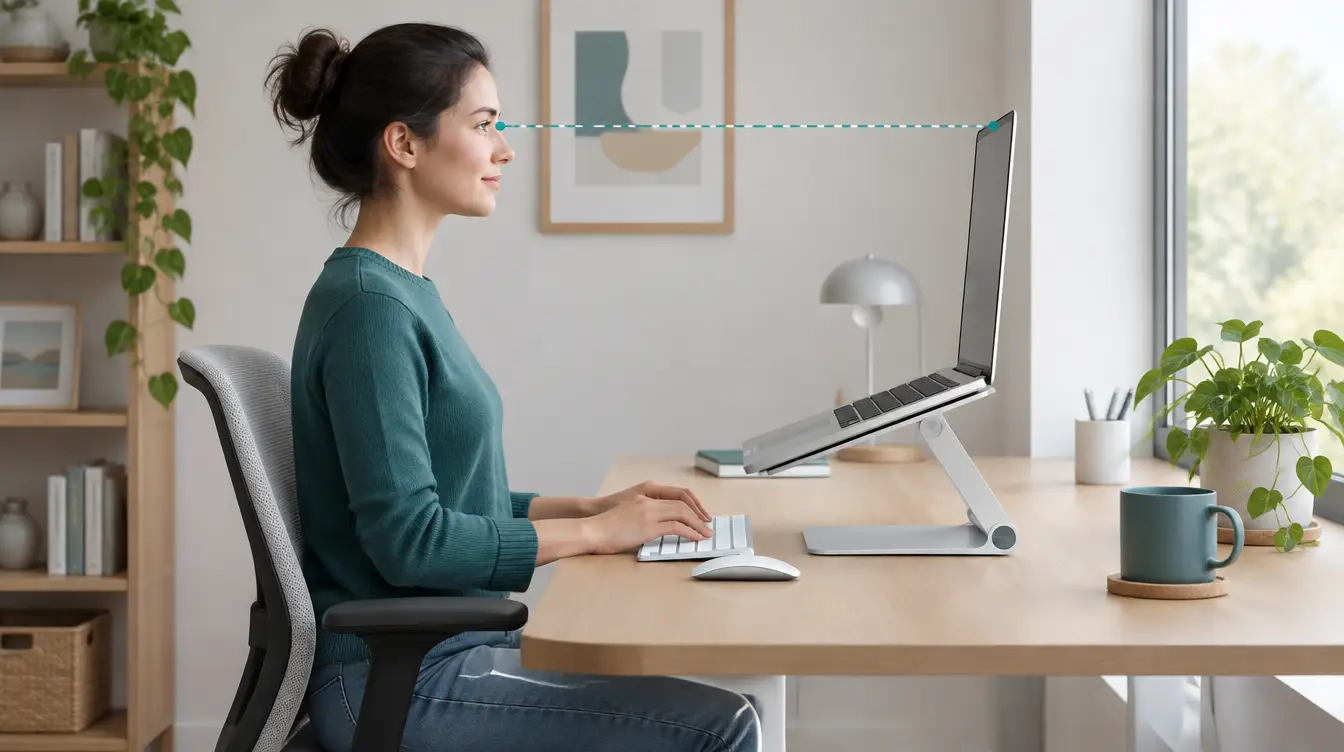
- Height range. The single most important spec. Sit at your desk, look straight ahead and measure from the desk surface to your eye line. Subtract the height of your laptop screen; the result is roughly the lift you need. Taller people and standing desks need 10 inches or more.
- Adjustability. A fixed riser is the most stable, but it only fits one person and one chair height. An adjustable stand fits shared desks and changes between sitting and standing.
- Stand weight. Heavy aluminum (3 lb and up) means a steady screen when you type on the laptop itself. Under half a pound means it lives in your bag.
- Load capacity and laptop size. Check both. The Curve Flex is rated for laptops up to 7 pounds and at least 8.66 inches wide (Twelve South); the Nexstand K2 takes 10 to 17 inch laptops and up to 20 lbs (Nexstand).
- Front edge clearance. Folding stands grip the front of the laptop with small hooks. Nexstand says the front edge must be under 2 cm (0.8 in), which rules out some thick gaming laptops.
- Folded size. Only relevant if the stand travels. The Roost V3 folds to 1 x 1.5 x 13 inches (Roost), about the size of a compact umbrella.
How high should a laptop stand be?
High enough that the top line of the screen is at or slightly below eye level. OSHA also recommends that the center of the screen sit 15 to 20 degrees below your horizontal eye line, at least 20 inches from your eyes, with a preferred distance of 20 to 40 inches. A laptop on a flat desk misses that target by several inches for most adults, which is why you end up looking down all day.
Our guide on how high your monitor should be walks through the measurement step by step. The same rules apply to a laptop screen on a stand.
What types of laptop stands are there?
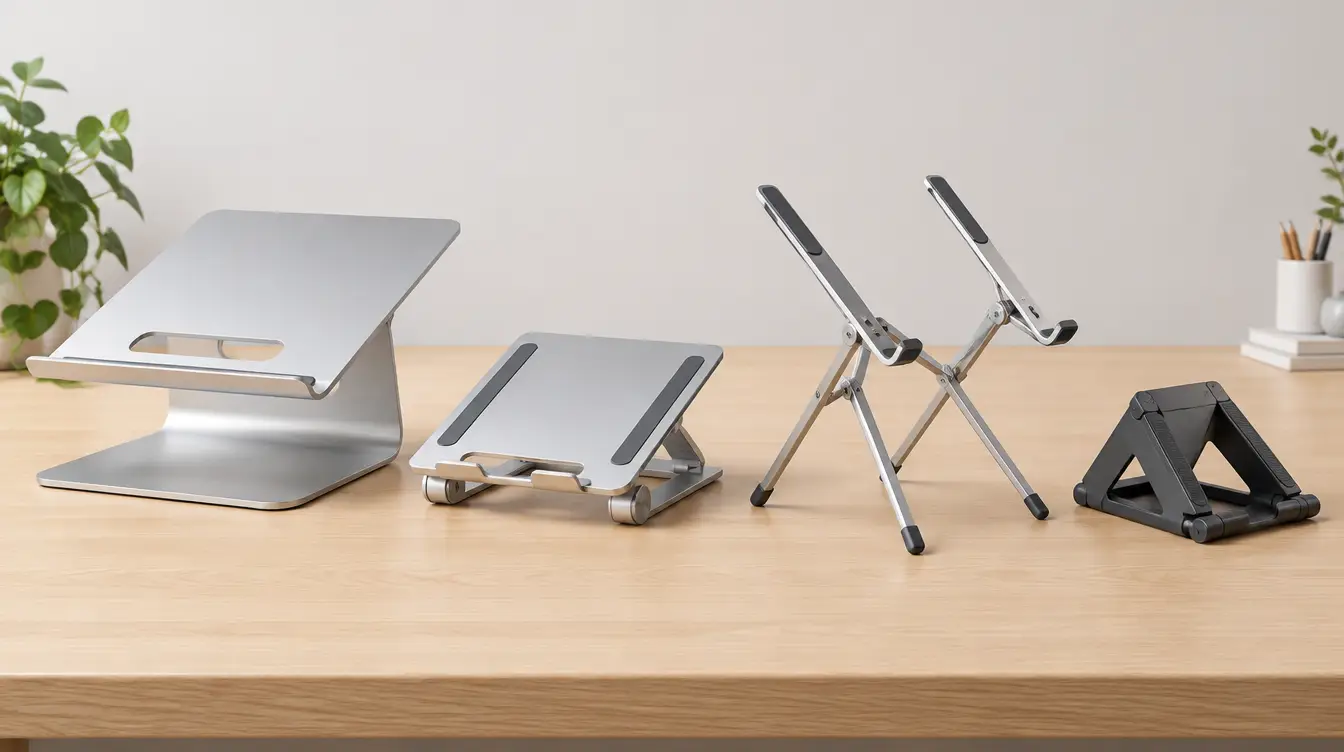
- Fixed risers such as the Rain Design mStand and the original Twelve South Curve. One height, no moving parts, very stable.
- Adjustable desk stands such as the iLevel 2 and the Curve Flex. Heavier, with a slider or hinge to change height or angle.
- Portable folding stands such as the Roost V3 and the Nexstand K2. Light enough for a backpack, with click positions instead of fine adjustment.
- Sit-to-stand risers such as the Lifelong Upryze. Very tall height ranges, so a laptop on a normal desk can reach standing eye level.
The 6 laptop stands worth comparing
BEST ADJUSTABLE DESK STAND
Rain Design iLevel 2
- Best for: a permanent desk where you want to fine-tune the height without tools.
- Key specs: 5.4 to 7.9 inch height via a front slider knob, anodized aluminum, 10.1 x 8.8 inch footprint, 3.5 lb (Rain Design).
- Skip it if: you are tall or use a standing desk; 7.9 inches tops out early.
The iLevel 2 is the top pick in Wirecutter’s laptop stand guide. The slider changes both height and tilt in one motion, and the heavy base stays put while you type.
BEST FOR MACBOOK DESKS
Twelve South Curve Flex
- Best for: a MacBook desk that changes between video calls and typing, and the odd trip.
- Key specs: up to 10.78 inches tall unfolded, 0 to 45 degree tilt, folds flat to 1.18 inches, 1.75 lb aluminum, laptops up to 7 lb and at least 8.66 inches wide (Twelve South).
- Skip it if: you never change the height; the fixed Curve or mStand is simpler.
I use a Twelve South Curve on my own desk. The Curve Flex is the adjustable version of that design: the same aluminum look, but with a hinge for height and angle and a flat fold so it can go in a laptop sleeve.
BEST FIXED RISER
Rain Design mStand
- Best for: one person, one chair, one desk, and a budget.
- Key specs: fixed 5.9 inch height, 10 x 7.5 inch footprint, one-piece aluminum, 3 lb (Rain Design).
- Skip it if: 5.9 inches does not bring the screen to your eye line; there is no way to raise it.
The mStand has been around for years for a reason: there is nothing to loosen or wobble, and the space underneath holds a keyboard when you are done for the day. Wirecutter lists it as its budget pick.
BEST FOR TRAVEL
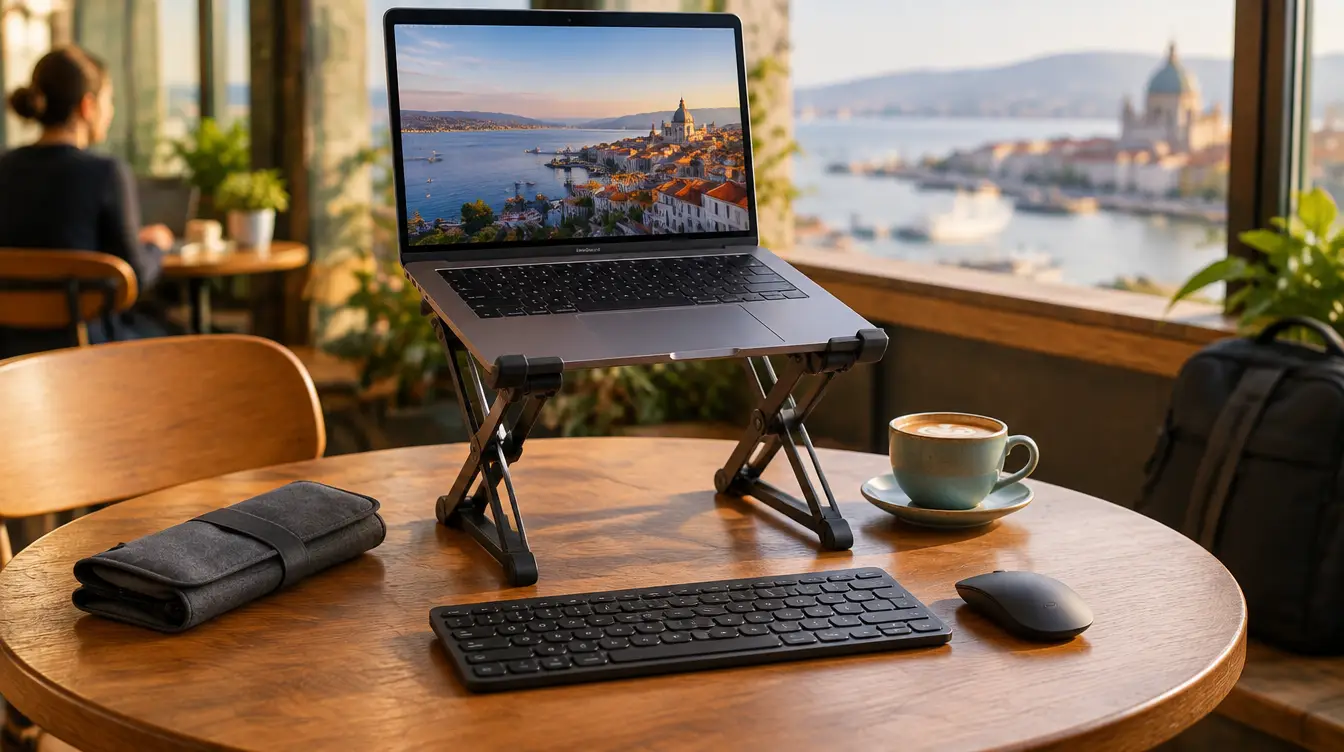
Roost V3
- Best for: frequent travelers and hot-desking.
- Key specs: 6.5 to 12.5 inch screen lift in 7 settings, 6 oz, folds to 1 x 1.5 x 13 inches; the V3 Plus adds quick release and 5 to 14 inches in 11 settings (Roost).
- Skip it if: you type directly on the laptop keyboard; a folding stand flexes under hard key presses.
BEST BUDGET PORTABLE
Nexstand K2
- Best for: the Roost idea at a lower price, or larger laptops up to 17 inches.
- Key specs: 5.5 to 11.8 inch height in 8 positions, 234 g, fiber-glass reinforced nylon, 10 to 17 inch laptops, 20 lb load, front edge under 2 cm, folds to 14 x 1.5 x 1.5 inches (Nexstand).
- Skip it if: you want metal parts and the lightest possible bag; it is slightly heavier and larger folded than the Roost.
BEST FOR SITTING AND STANDING
Lifelong Upryze
- Best for: working standing at a normal desk or counter without buying a standing desk.
- Key specs: up to 20 inches tall in 20 positions, 10 to 17 inch laptops and tablets, folds flat (Lifelong).
- Skip it if: you only ever sit; a tall stand at full height is less stable than a low riser.
Wirecutter picks the Upryze for people who switch between sitting and standing. At 20 inches it is the only stand here that can lift a laptop to standing eye level from a regular desk.
What are the disadvantages of a laptop stand?
- You need an external keyboard and mouse. Once the screen is at eye level, the built-in keyboard is too high and too steep to type on comfortably. Budget for both; our keyboard guide for Mac covers the options.
- More cables on the desk. A raised laptop plus keyboard, mouse and charger means more clutter. A USB-C dock cuts that down to one cable.
- Folding stands wobble. Light stands trade stability for weight. They are fine for reading and video calls, less so for heavy typing on the laptop itself.
- Height is still a compromise. A laptop screen is small. If you work at a desk all day, an external monitor at the right height does the job better.
Should you buy a laptop stand?
Buy one if a laptop is your main screen for more than an hour or two a day, or if you take video calls and want the camera at face height instead of looking up your nose. Skip it if your laptop already sits next to an external monitor that you look at most of the time; then the laptop is a second screen and its height matters less. The full workspace picture is in our ergonomic desk setup audit.
Frequently asked questions
What is a laptop riser?
A laptop riser is a fixed laptop stand: a solid platform that lifts the laptop to one set height. The Rain Design mStand and the original Twelve South Curve are risers. Adjustable stands change height; risers do not.
Is a laptop stand bad for the laptop?
No. Open-frame and aluminum stands leave space under the laptop, so air can reach the bottom vents. Check that the stand’s grips fit the front edge of your laptop and its weight limit covers your model.
How high should a laptop stand be for a tall person?
Taller users need more lift than fixed risers offer. Look for 10 inches or more: the Curve Flex reaches 10.78 inches, the Nexstand K2 11.8 inches, the Roost V3 12.5 inches of screen lift and the Upryze up to 20 inches.
Can I type on a laptop on a stand?
You can for short bursts on a low, stable stand such as the iLevel 2 at its lowest setting. For real work, raise the screen to eye level and use an external keyboard and mouse at elbow height.
Final Verdict
For a desk that stays put, get the Rain Design iLevel 2 if you want fine height control, the Twelve South Curve Flex if you also want angle control and a flat fold, or the mStand if one fixed height fits you. For travel, the Roost V3 is the lightest and the Nexstand K2 costs less and fits larger laptops. If you want to stand, the Lifelong Upryze is the only stand here tall enough. Whichever you pick, pair it with an external keyboard and mouse, and measure your eye height before you buy.
Affiliate disclosure: This post contains affiliate links. If you purchase through them, I may earn a commission at no extra cost to you. Full disclosure.


