
This post contains affiliate links. If you buy through them, I may earn a commission at no extra cost to you. How this works.
In this article
To spot fake reviews, check three things: evidence of real use (photos, measurements, specific drawbacks), a clear disclosure of any payment or free product, and agreement with independent sources. One glowing review proves nothing, but a consistent pattern of specific, mixed feedback across several sources is something you can trust.
Gut feeling is not enough. In a Cornell study, human judges spotted fake hotel reviews at roughly the rate of a coin toss, while a trained classifier reached 89.8% accuracy (Ott et al., ACL 2011). The seven checks below give you a repeatable method instead of a hunch, whether you are reading Amazon ratings, YouTube videos, or a tech site like this one.
Why are fake reviews so hard to spot?
Fake reviews are written to look average. The Cornell researchers paid writers to produce 400 deceptive hotel reviews and mixed them with 400 genuine ones. Their human judges performed at about chance, and all three leaned towards believing the reviews were truthful, a pattern psychologists call truth bias (paper on arXiv).
Tech reviews add a second problem: many are not fake, just shallow. A page that rewrites the spec sheet and adds five stars is not lying about its experience, it simply has none. The checks below catch both.
How to spot fake reviews: 7 checks
| Check | Trust signal | Red flag |
|---|---|---|
| 1. Real use | Own photos, measurements, a time frame | Only spec sheet facts |
| 2. Disclosure | Named relationship near the review | No mention, or buried in a footer |
| 3. Drawbacks | Specific, product-relevant flaws | Vague or no criticism |
| 4. Patterns | Varied wording, spread-out dates | Repeated phrases, bursts of reviews |
| 5. Middle ratings | Consistent issues in 2 to 4 star reviews | Only 1 star and 5 star reviews |
| 6. Independent data | Matches lab tests and spec pages | Contradicts measured results |
| 7. Track record | Published method, some negative verdicts | Every product is a must-buy |
1. Look for evidence of real use
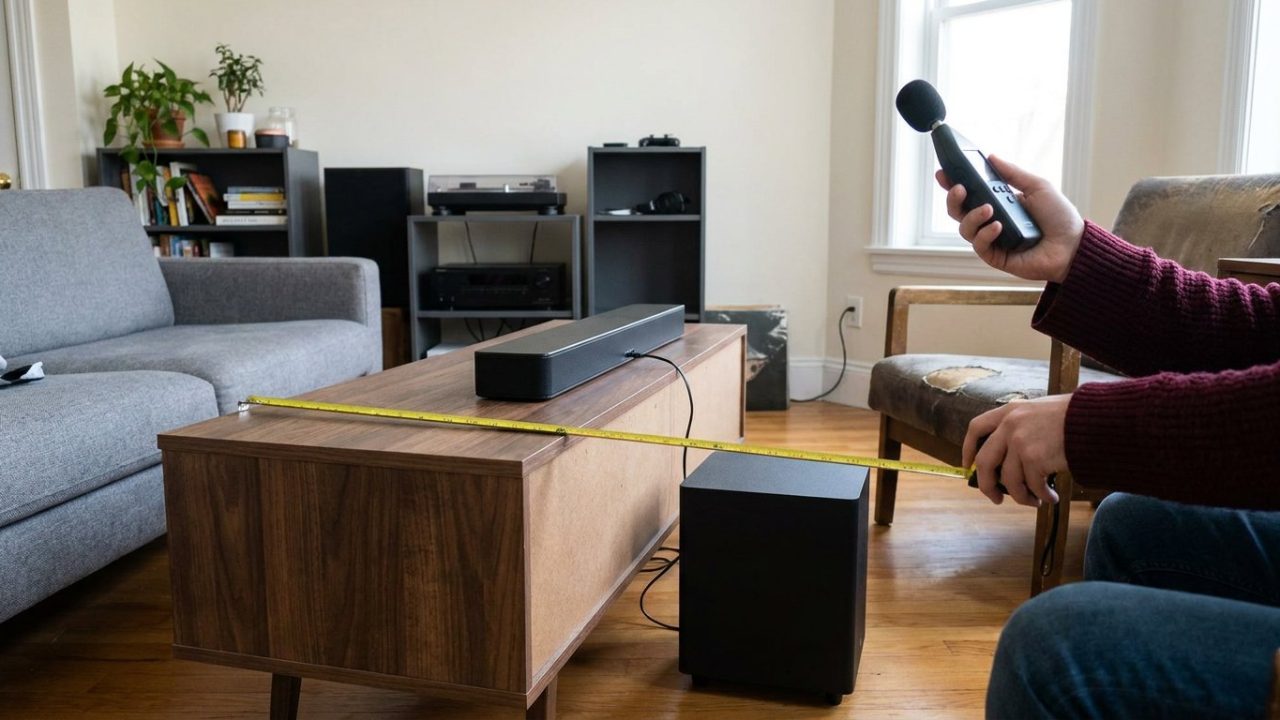
A genuine review contains details you only get by owning the product: how long the battery lasted on their workload, what the fan sounds like on a video call, which port loosened after a month. Look for original photos, screenshots of measurements, and a stated test period. If every fact in the review also appears on the manufacturer’s page, the reviewer may never have touched the product.
2. Read the disclosure
Under the FTC’s Endorsement Guides (16 CFR Part 255, revised in 2023), a reviewer who gets paid, receives a free product, or earns an affiliate commission has a material connection and must disclose it clearly. A disclosure does not make a review dishonest. A missing one, on a page full of buy buttons, is a warning sign.
3. Check whether drawbacks are specific
Every product has trade-offs. A trustworthy review names them precisely (“the keyboard flexes near the trackpad”, “no Ethernet port”) and explains who should care. Generic criticism such as “could be cheaper” is filler. A review with no drawbacks at all is closer to an advert than a review.
4. Watch for wording and timing patterns
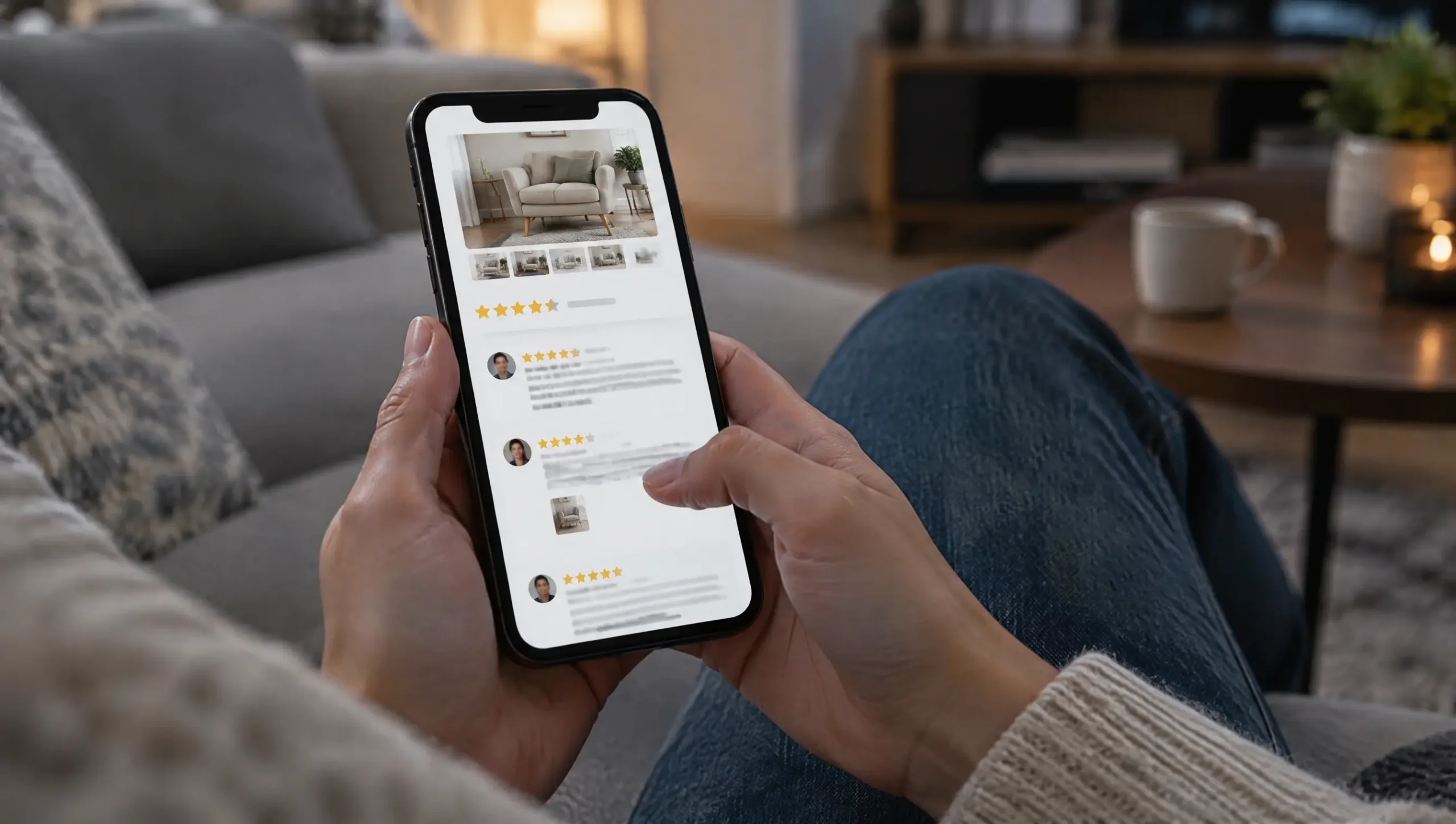
On a retailer’s page, sort by most recent and scan a few dozen reviews. Clusters of near-identical phrasing, many reviews posted within a few days, or reviewers who praise the brand name more than the product all suggest coordinated reviews. Treat each signal as a reason to look closer, not as proof on its own.
5. Read the 2 to 4 star reviews
Fake campaigns push the extremes: 5 stars to boost a product, 1 star to sink a rival. The middle ratings come mostly from real owners with mixed experiences. If several 3 star reviews describe the same failure (a dock that drops displays after sleep, a mouse that double-clicks after a few months), believe the pattern over the average score.
6. Cross-check with independent data
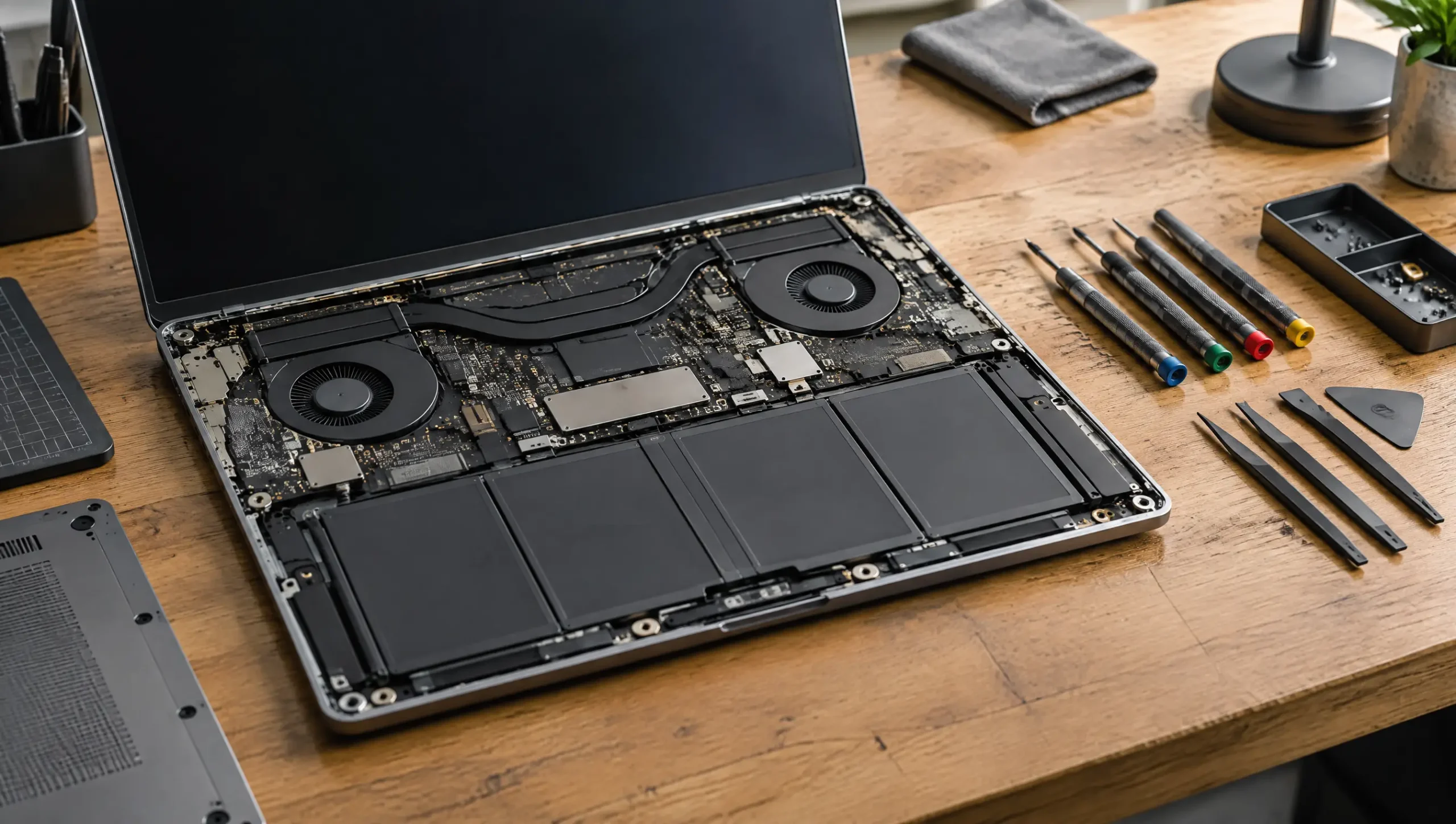
Measured results are harder to fake than opinions. Repairability scores are a good example. iFixit rated the Surface Laptop Ultra 8 out of 10 for repairability (Notebookcheck report) and the 14-inch M5 MacBook Pro 4 out of 10 (iFixit device page). If a review calls a laptop “easy to upgrade” while its RAM is soldered, the review is wrong, whatever its star rating.
Compare claims the same way against manufacturer spec pages: if you are weighing the Surface Laptop Ultra against the MacBook Pro 14-inch (M5), check battery capacity, ports and memory on the official pages rather than trusting a reviewer’s summary. If you plan to do your own repairs, a proper iFixit Pro Tech Toolkit matters more than any score.
7. Check the reviewer’s track record
Look at what else the reviewer has published. A trustworthy site explains how it tests, labels hands-on reviews separately from research-based guides, and sometimes tells you not to buy. If every product on the site earns a must-buy verdict, the verdicts carry no information. For a buying process that does not depend on any one reviewer, use the 7 checks before you buy any gadget.
What does the FTC fake review rule ban?
The FTC’s Trade Regulation Rule on the Use of Consumer Reviews and Testimonials (16 CFR Part 465) was announced on August 14, 2024 and took effect on October 21, 2024. It lets the FTC seek civil penalties against knowing violators. The rule bans:
- Fake reviews and testimonials, including AI-generated ones, that misrepresent who the reviewer is or what they experienced.
- Paying for a specific sentiment: compensation conditioned on a positive (or negative) review.
- Undisclosed insider reviews by company officers or managers.
- Fake “independent” review sites controlled by the brand they review.
- Review suppression through legal threats, intimidation or false accusations.
- Fake social proof, such as bought followers or bot-generated views.
The rule does not ban affiliate links, free review samples, or sponsored content. It bans hiding them or faking the experience. That is why the disclosure check above matters more than whether a review earns money.
Do fake review checker tools still work?
The best-known tool is gone. Mozilla shut down Fakespot, including its browser extensions, apps and website, on July 1, 2025, and ended the Firefox Review Checker on June 10, 2025 (Mozilla announcement). Other analysers exist, but none can see a retailer’s internal purchase and account data, so treat any score as one more signal. The seven checks above work on any site without an extension.
How 9to5stuff reviews products
This site applies the same checks to itself:
- Hands-on or research-based, labelled. I only describe a product as tested when I have used it. Everything else is marked as research-based.
- Sourced specs. Every spec and statistic links to the manufacturer page, standards body or study it comes from.
- Disclosed links. Affiliate links are marked at the top of the post and never change a verdict. See the affiliate disclosure.
- Honest verdicts. If the right answer is “keep what you have” or “buy the cheaper model”, the post says so.
- Corrections. If you spot an error, tell me and I will fix it and note the change.

Frequently asked questions
Are verified purchase reviews always genuine?
No. A verified purchase label only confirms that the platform recorded a sale to that account. A real buyer can still be offered a refund or gift card for a positive review, which is exactly the kind of paid sentiment the FTC rule now bans. Treat the label as one signal and read what the review actually says.
Is it illegal to post fake reviews in the US?
Yes for businesses. Since October 21, 2024, the FTC’s rule on consumer reviews and testimonials (16 CFR Part 465) bans fake reviews, paid sentiment, undisclosed insider reviews and review suppression, and the FTC can seek civil penalties against knowing violators.
Can AI detect fake reviews?
Automated classifiers outperform people: in the Cornell study, a classifier reached 89.8% accuracy where human judges performed at about chance. Large platforms say they use automated detection, but no public tool sees their purchase and account data, so manual checks still matter.
Are sponsored reviews fake?
Not necessarily. A sponsored or affiliate-funded review is legal if the relationship is disclosed clearly and the opinion is the reviewer’s own. Judge it by its evidence: real use, specific drawbacks, and agreement with independent data.
What should I do if I spot a fake review?
Report it to the platform with its built-in report option. If a business is behind it, you can also report it to the FTC at ReportFraud.ftc.gov.
Final Verdict
No single signal proves a review is fake, but three together rarely mislead: evidence of real use, a clear disclosure, and agreement with independent data. Read the middle ratings, distrust reviews with no drawbacks, and give more weight to sites that publish their method and occasionally say “don’t buy”.
Next step: before your next purchase, run the product through the 7 checks before you buy any gadget, then compare picks in the best home office productivity gadgets guide.
Affiliate disclosure: This post contains affiliate links. If you purchase through them, I may earn a commission at no extra cost to you. Full disclosure.